Insights · Supply Chain & Private Equity

Between the headlines and the hold period: Six supply chain questions reshaping the PE industrial thesis in 2026.

A deep dive for the private equity ecosystem on what's actually shaping industrial and manufacturing portfolios this year, written not as a forecast, but as the set of open problems I'm wrestling with alongside sponsors and portfolio company leadership.

Author
Alex KruzelAlex Kruzel
Audience
PE investors & portfolio company executives
Sector focus
Industrials & manufacturing
Reading time
~5 min skim · 10 min deep
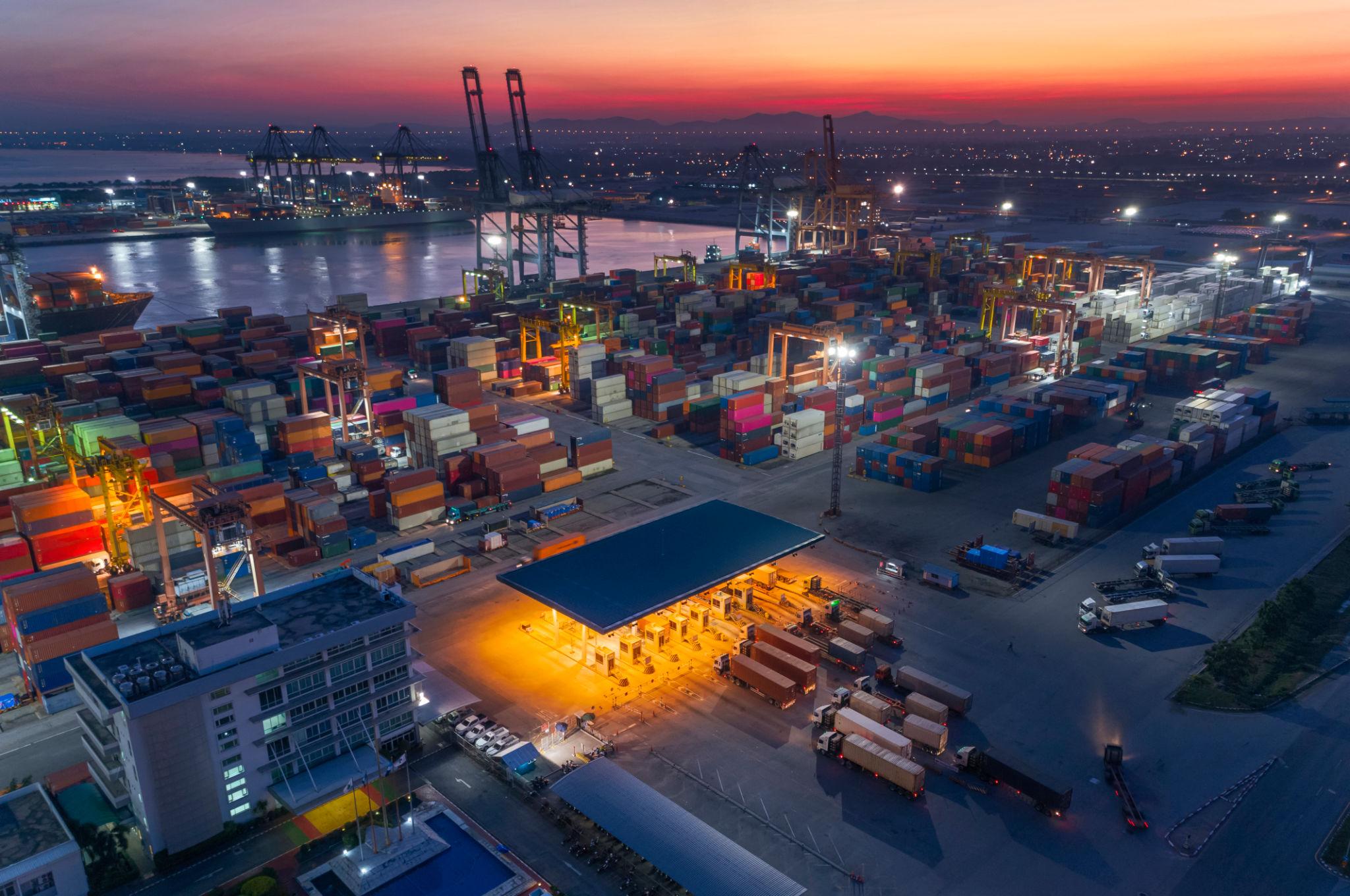
Container port at sunset with stacked containers and cranes silhouetted against a dusk sky, global trade infrastructure
The supply chain stresses of 2026 are concentrating in ports, pipelines, and chokepoints that most industrial LBO models never priced.
Why these questions, why now

Most 2026 outlooks read like weather reports: here is what is happening, here is the three-step action plan. I don't find those useful, and neither do the sponsors and operators I work with. What's actually happening in investment committees this spring is more uncomfortable, almost every assumption embedded in a 2023 or 2024 industrial PE thesis has been touched by something: a tariff, a tanker, a mineral, an algorithm, a storm, a disclosure rule.

The question is no longer whether supply chain risk is material. It is whether our governance, our capital structures, and our operating partnerships are built to price it.

What follows are six questions I keep coming back to (with portfolio company CEOs) operating partners, CFOs preparing for exit, and directors on audit and risk committees. For each, I've separated what I'm seeing from what I'm questioning from what I'm working through. I don't have clean answers to all of them. That's the point.

The geography of the problem

Where the six questions land on a map.

Before we get to the questions themselves, a view of the geographies where this year's supply chain stresses are concentrating. Click any point for the underlying exposure and the trends it connects to.

01Tariff discipline 02Gulf & energy repricing 03Logistics as strategy 04Critical minerals 05AI in operations 06Climate & emissions as impairment
Critical disruption
Elevated exposure
Opportunity / reshoring corridor

Sources: US EIA Short-Term Energy Outlook (February 2026) · IEA Oil Market Report (March 2026) · IndustrialSage US Manufacturing Investment Tracker (March 2026) · USGS Critical Minerals List · UNCTAD Global Trade Outlook · ISM Manufacturing PMI

$1.6T
Announced US manufacturing investment since Jan 2025, across 132 companies in 32 states
IndustrialSage, Feb 2026
$92
Brent crude spot, early 2026 average, up sharply on escalating Gulf tensions; EIA scenarios run to $115+ through Q2
US EIA STEO, February 2026
~10×
Reported rise in war-risk insurance premiums for Gulf transit as regional tensions escalated through early 2026
Lloyd's market commentary, February 2026
80%
Of manufacturers planning to invest 20%+ of improvement budgets in smart manufacturing
Deloitte Manufacturing Survey, 2026
The six questions, at a glance

Ranked by what is quietly re-shaping the thesis, not the headlines.

Each row links to the full analysis. Criticality reflects both the probability of material portfolio impact in 2026 and the readiness of typical mid-market industrial platforms to respond. Click any row to jump in.

# Question My working verdict Criticality Horizon
01 Is tariff engineering a real competency, or are we just mistaking reactivity for strategy? Quietly divisive. Divergence between portcos that built real discipline and those that just raised prices once is about to show up in exit valuations. Severe Active · 2026–27
02 How do we price a portfolio company whose energy and feedstock curves just changed shape? Most urgent. Brent has repriced sharply in early 2026 with EIA Q2 scenarios running to $115+. LBO models are using aspirational assumptions; covenant breach risk is real in energy-intensive portfolios. Severe Active · Q2 2026
03 When did shipping stop being an operational line item and start being a strategic choice? Decision-rights gap. Realized logistics cost up 15–35% YoY for platforms with international exposure. CFOs aren't in the loop until quarter-end variance. High Active · Ongoing
04 If the US lists 50 minerals as critical, how many does my portfolio company actually control? Under-diligenced. Exposure hides in capital equipment (motors, drives, magnets) and tier-2/3 suppliers, rarely quantified in IC memos. High Structural · 2–5 yr
05 Is AI actually changing mid-market manufacturing, or are we documenting the same pilots over and over? Transitioning from differentiator to ante. Adoption is bifurcating. Real constraint isn't capital, it's operators who can integrate AI into decision rights. Moderate Structural · 24–36 mo
06 Is climate risk still an ESG conversation, or has it quietly become a balance-sheet conversation? Mis-categorized. Showing up as insurance premium creep (+15–40% annually), disclosure cost, deferred capex, and quietly, impairment risk. Not priced in most models. High Building · 2026–28

Criticality reflects Alex's working view as of January 2026. Rankings will shift as the year unfolds, particularly if Gulf tensions de-escalate or if critical-mineral export restrictions expand.

Closing perspective

These aren't forecasts. They're the open problems I'm working on.

If there's a thread running through all six questions, it's this: the supply chain exposures that will make or break a 2024–2026 industrial PE vintage are not the ones that got underwritten. They're the ones that were assumed away or pushed to "manage through operations" during diligence, and they're now showing up on the P&L in ways that are hard to unwind quickly. That's not a criticism of sponsors or management teams. Some of these risks moved faster than even careful underwriting could have anticipated. The question is not whether we should have known. It's what we do now that we do.

My operating assumption for the rest of 2026 is that supply chain resilience will become a valuation premium at exit, not a nice-to-have operational story. The portfolios that treat these six questions as live problems (with real governance, real capital, and real decision rights) will command that premium. The portfolios that continue to delegate them to procurement will be the cautionary tales in the next cycle of LP letters.

I'd rather be in the first group. I suspect you would too.

Alex Kruzel CEO & Founder, Telesto Strategy · Author, The Courage to Continue · Board Director, Chicago Council on Global Affairs